
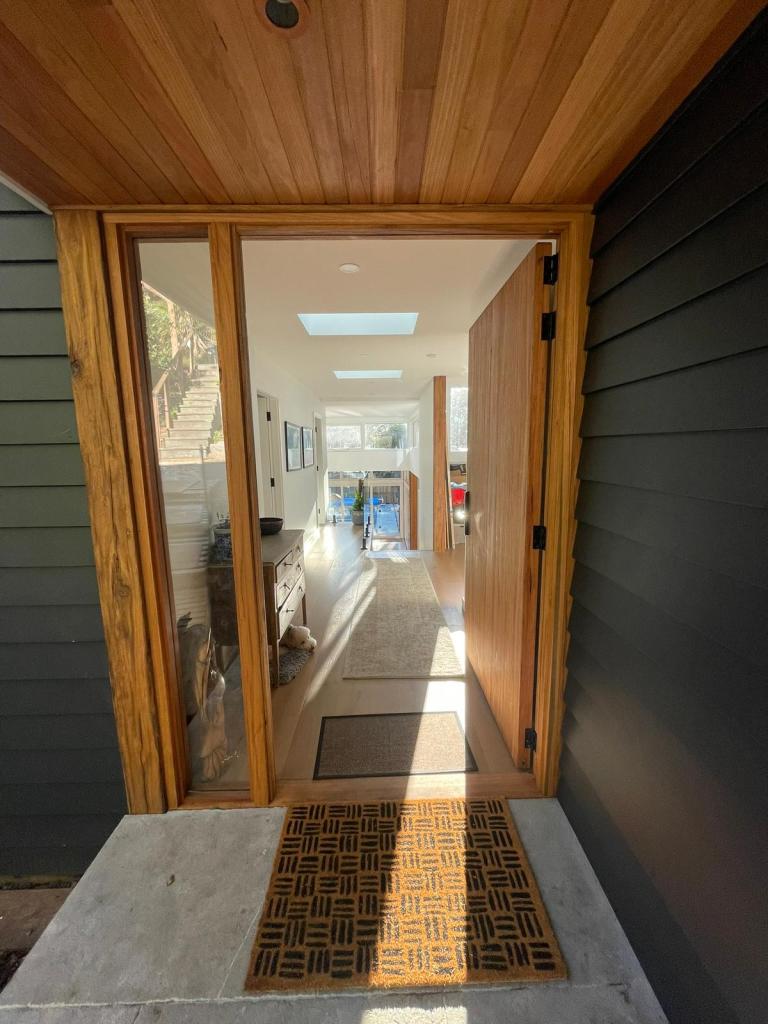
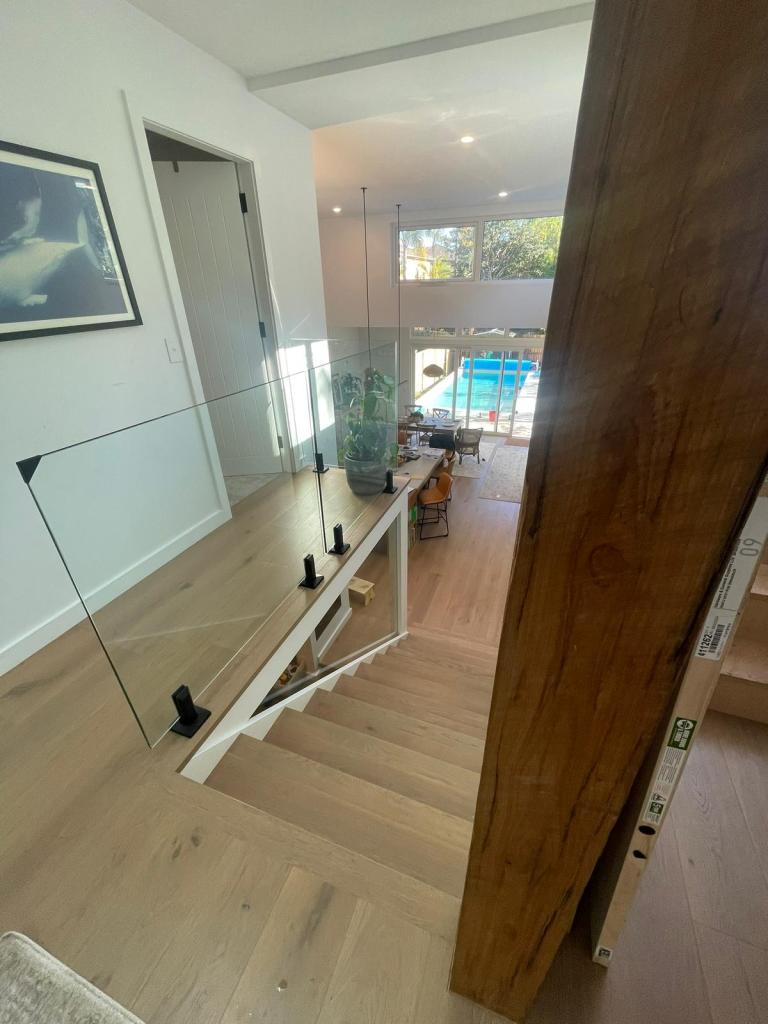
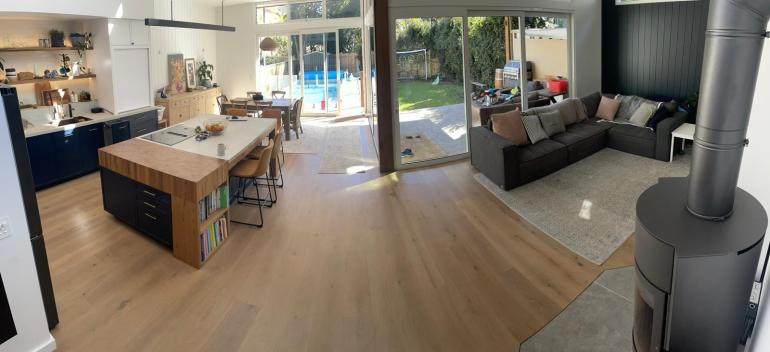
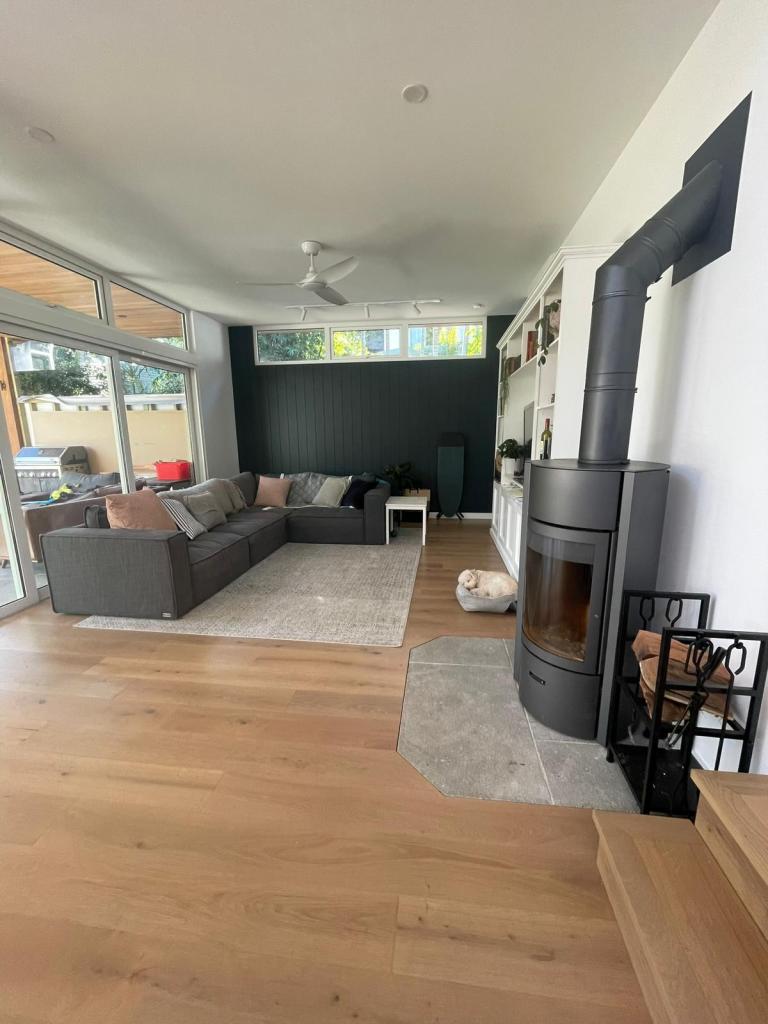
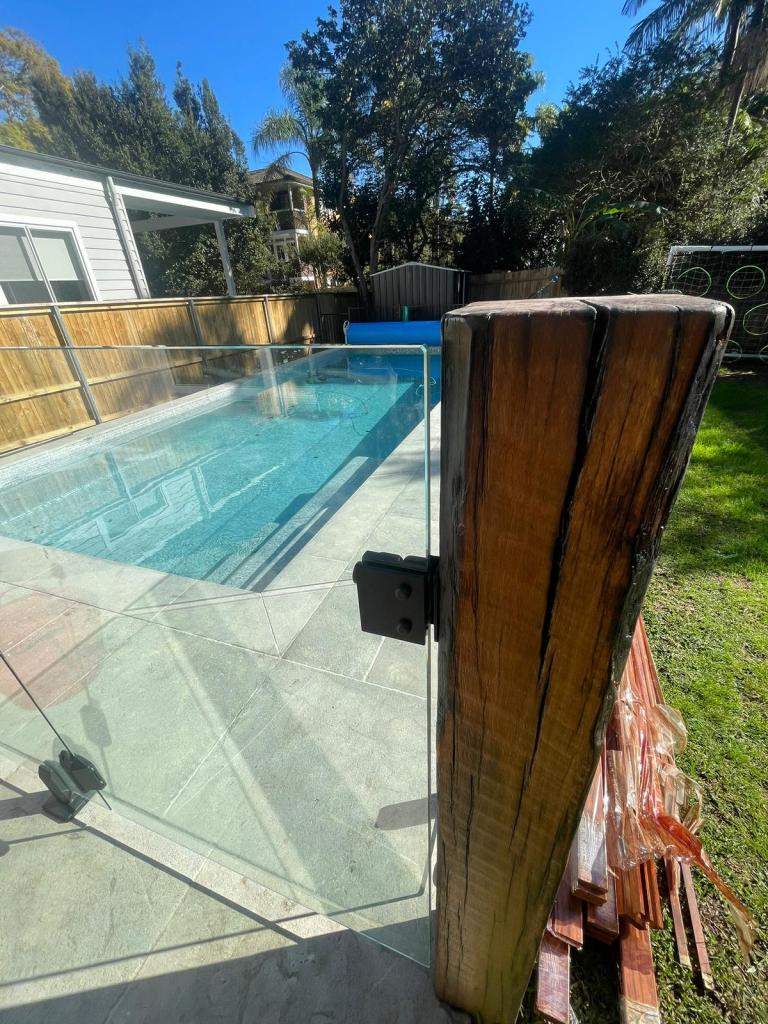
The existing house was well past its ‘use by date’ with an awkward layout, little connection to the garden, no outlook, and poor access down from the raised street level, so demolition would have been first choice for many. But the owners were committed to making all aspects of their homelife as sustainable as possible, and that started with retention of the existing structure to preserve its embodied carbon. They also wanted to manage the construction process themselves, doing the work in stages as finance and family needs dictated, so it was critical the house remained habitable at (almost) all times. A masterplan was developed, of which only the first phase has been completed to date. This involved lowering the floor level of the open-plan living/dining/kitchen space at the back to improve access to the garden, including a large covered deck and new swimming pool. The roof was stepped up above the kitchen to create a ‘turret’ with high level windows on three sides for daylight, ventilation and outlook, the ceiling level continuous with the front section to visually connect the spaces. The bedrooms and bathrooms in the front section were reconfigured, whilst some basement space was opened up for a playroom and study. Provision has been made for a full second storey with a flexible layout that could function as a parents retreat, granny flat, or home office depending on need at the time, and this would open direct from the street level. Energy efficiency was improved by insulating the external walls and installing double-glazed windows, solar PV panels and a wood stove. Recycled timber posts, a ‘green roof’ terrace and rainwater tanks complete the sustainable features.
 ecohus.net